Nature, infrastructure, and the choices we make

Estelle Bailey reflects on place-based strategies unlocking nature recovery, climate resilience, and stronger social outcomes.

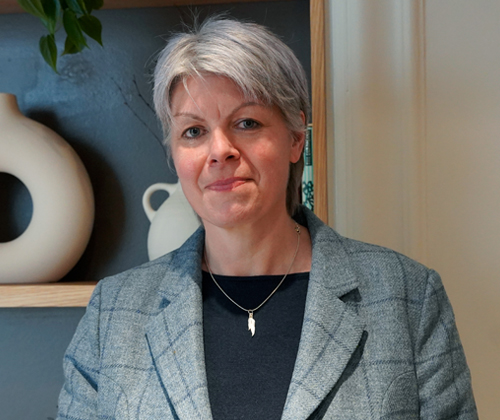
Estelle Bailey - External TrusteeWith over two decades of experience at the intersection of nature, place, people, and the built environment, Estelle Bailey MBE brings a systems-thinking lens to some of today’s most pressing challenges. As Chief Executive of Berks, Bucks & Oxon Wildlife Trust and External Trustee at the Useful Simple Trust (Trust), she has long championed joined-up approaches to environmental and social change.

Here, Estelle reflects on how place-based strategies can unlock nature recovery, climate resilience, and stronger social outcomes:

When travelling between Oxford and Cambridge, I often find myself looking out of the window more than I probably should. It’s a landscape I know well: fields stitched together by hedgerows, rivers moving quietly through the land, pockets of woodland holding on. On a good day, a red kite hangs in the sky, or a hare moves quietly along a field margin; half seen, gone in a moment. It’s beautiful, but fragile. And once you start to see it like that, it’s hard to unsee.

These landscapes have been hard worked for generations to produce food. A lot of it. Alongside this, we’ve seen significant population growth coupled with an increasingly intensive and often unsustainable land use. New settlements, such as Milton Keynes, were deliberately designed with the future in mind and are now ready for their next evolution. This is also a highly water-stressed part of the country. How water moves, is absorbed and stored is not a secondary consideration; it’s fundamental.

A brown hare in nature, courtesy of Sue WoodNature as infrastructure, not an afterthought

I’ve spent much of my career working in nature conservation, focused on restoring what’s been lost and protecting what remains. More recently, I’ve found myself drawn deeper into the built environment, not as a departure but as a realisation.

The way we design and build our towns, infrastructure, and buildings is one of the most powerful forces shaping the future of nature. This is what drew me to my Trustee roles at both the Trust and UK Green Building Council (UKGBC).

If we’re serious about nature’s recovery, we have to change the system that’s driving its decline. The Oxford-Cambridge Growth Corridor brings this into sharp focus. Here is a real ambition. New homes, new infrastructure, new economic opportunities. It matters, but sits within a landscape already under pressure. Wildlife has declined dramatically since the 1970’s; habitats are fragmented, and the natural systems that support water, soil, and climate resilience are being stretched.

I have often seen growth vs nature described as a tension. I don’t think that framing holds anymore. The more time you spend outside, really noticing what’s going on, the more obvious it becomes that nature isn’t something sitting at the edges; it’s doing the heavy lifting.

Nature regulates water when it rains, cools places when temperatures rise, supports the soils that grow our food, and underpins our health and wellbeing. Put simply, nature isn’t just a ‘nice to have’; it’s infrastructure. And yet we continue to design as if it isn’t.

Too often, we build and then we mitigate engineering solutions to problems that better design could have avoided: flooding, overheating, declining biodiversity, poorer health outcomes. For every pound invested in protecting nature, considerably more is spent driving its loss. This is a deeply flawed system; not an inevitability, but a consequence of choices.

Where does this path lead? To a generation growing up in places dominated by concrete and tarmac, with fewer chances to experience the natural world as part of everyday life, and a gradual resetting of expectations. Degraded nature and climate instability are becoming normal.

Designing with systems, not against them

This trajectory is shaped, in large part, by design. The opportunity in the Growth Corridor is to take a different approach. To start with the land itself, we must understand how water moves, how soils function, where habitats can be strengthened or connected, and recognise that food production, land economics, and nature recovery are part of the same system. They’re not separate conversations.

Nature-led design is not about adding green features at the end of a process. It’s about allowing natural systems to shape the form and function of places from the outset.

It’s here that built environment professions have enormous influence. Architects, engineers, planners, and designers make choices every day that determine whether nature is excluded or embedded; whether materials are extractive or regenerative, and whether buildings and infrastructure work with natural systems or against them.

In Europe, we are starting to see what ‘good’ looks like. In the Netherlands, water and landscape shape development decisions from the very beginning – as structure, not mitigation. In Copenhagen, green and blue infrastructure is designed to manage climate risk while creating better places to live. In Freiburg, whole districts have been built around energy, nature, and livability as a single system. These are signals of a positive approach.

The UK is beginning to build the frameworks to support this shift. The UKGBC’s Net Zero Carbon Buildings Framework has helped bring clarity and consistency across the built environment. Its emerging work on nature and biodiversity is starting to do the same, giving practitioners tools to integrate nature more meaningfully into design and delivery.
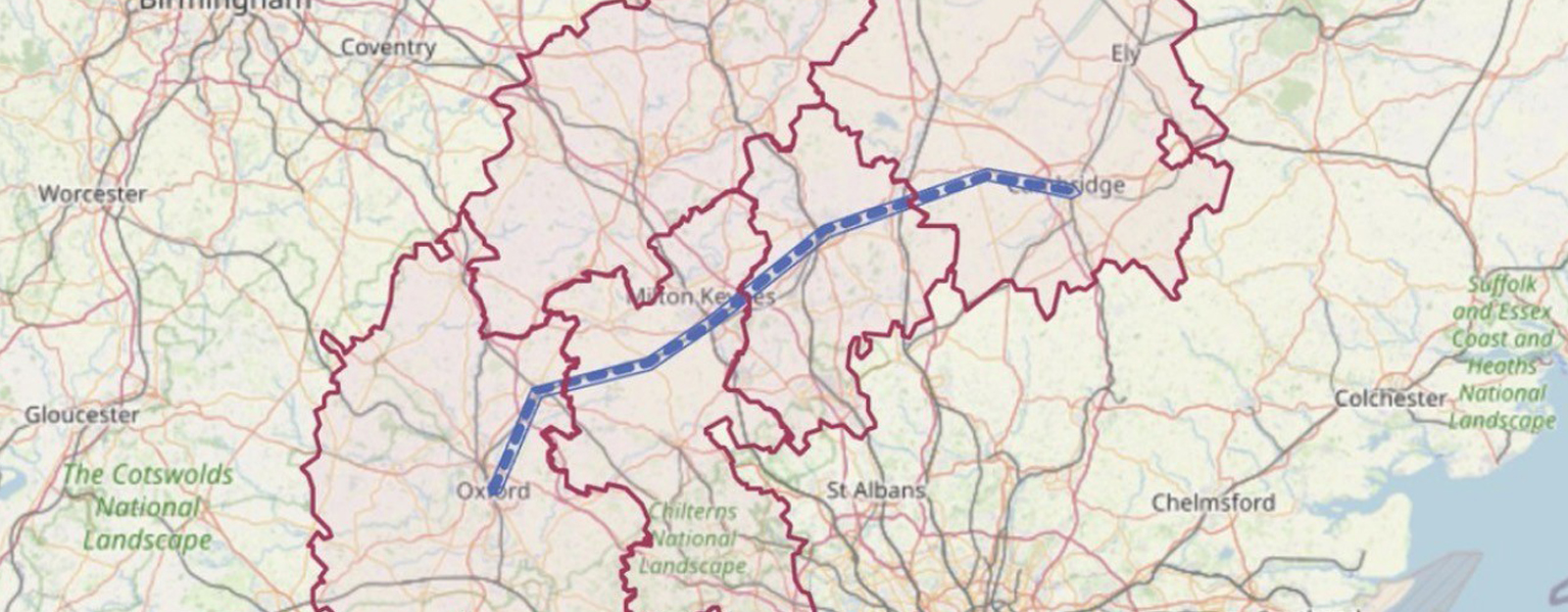
The 100 Miles Wider project map

From frameworks to everyday decisions

But frameworks alone are not enough. The real shift happens when these ideas move into everyday decisions, when nature is considered at the same time as cost, programme, and performance, influencing design from the outset.

That is where organisations like the Trust make a real difference bringing together engineering, design, and environmental thinking to turn intent into action. Helping projects move beyond compliance towards something more regenerative: not perfect solutions, but better ones, grounded in how systems actually work.

For me, this is also personal. About five years ago, I worked with the Trust on the ‘100 Miles Wilder’ project. The idea was simple but ambitious: to show how nature could underpin sustainable growth and living across the Growth Corridor while enabling recovery at scale.

The Trust has remained part of the thinking as this work has evolved. In many ways, this feels like coming full circle. The challenge in front of us is the same, just more urgent: to move from vision to delivery and prove that growth and nature can be designed together, not traded off.

If we could deliver something like the 100 Miles Wilder blueprint, it would be a remarkable achievement not just for the Growth Corridor, but as a model for how we approach growth more widely.

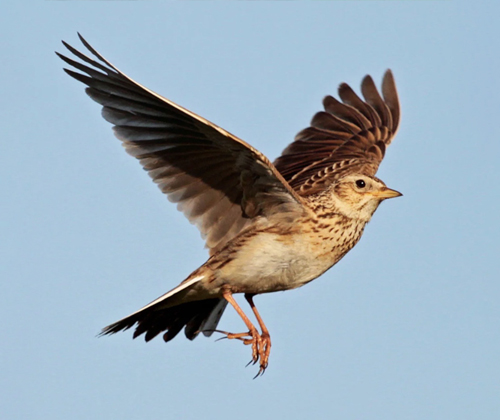
A skylark in flight, courtesy of Darren ChapmanWhat kind of future are we designing for?

I think back to my own childhood, spending hours outside without really thinking about it: fields, rivers, and the freedom to roam. It shaped how I see the world, and why I care about getting this right. It feels like that experience is becoming less common. These days, children rarely venture to the end of the street, let alone the miles of unstructured play time in nature many of us once had.

The Growth Corridor is a strong model for a different kind of future; one where nature is not designed out, but designed in. Where infrastructure includes rivers, soils, and ecosystems alongside roads and buildings; where the places we create actively support both people and the natural systems we depend on.

We know enough now to do this differently. The question is whether we choose to or not.

Turning targets into action

How can organisations move from climate ambition to meaningful action?

This is a question many of us are asking, especially as we navigate the complexities of decarbonisation and net zero goals. To mark Carbon Literacy Action Day 2025, our Sustainability Consultant Anna Biggs explores practical steps, challenges, and opportunities in creating a Climate Transition Action Plan (CTAP).

Why start a Climate Transition Action Plan?

Every organisation’s path to climate action begins with understanding its own impact. For us, measuring our carbon footprint – particularly Scope 3 emissions – was a crucial first step. This process helped us identify where our efforts could make the most difference, and it is a journey we know many others are embarking on right now.

Learning together

Our Q&A video is designed to answer the questions we hear most from clients and collaborators. These include how to get started with a CTAP, which frameworks and resources are most helpful, ways to engage suppliers and partners, and what meaningful progress looks like. We draw on trusted resources such as the Science Based Targets initiative, SME Climate Hub, and We Mean Business Coalition guidance. The real value comes from sharing experiences – what has worked, what has not, and what we are still figuring out.

Starting the conversation

We believe that real change happens when organisations connect, share, and learn from each other. #CarbonLiteracyActionDay2025 is about fostering those connections, opening conversations, exchanging insights, and building a community of businesses committed to climate action. Our approach is rooted in openness and transparency, and we invite you to join us in moving forward together.

If you are considering your own CTAP or looking to refine your approach, we hope this video offers practical insights and encouragement.

Get in touch to share your experiences. Together, we can learn, collaborate, and empower each other to drive impactful, tangible change.

Download our Climate Transition Action Plan.

Creating social value through design

Catherine Ramsden, our Founding Director, discusses the power of design with Jo Dobson at Useful Projects.

Jo Dobson, Director at Useful Projects, interviewed the Founder of Useful Studio, Catherine Ramsden, on the benefits of creating Social Value through design:

As a theme that is very close to our hearts, for Useful Projects and all our sister companies at the Useful Simple Trust, Social Value (SV) through design has reached a wider audience in the built environment in recent years. Catherine, could you tell us how the approach to creating SV through design became a feature of your architectural studio?

“Since I founded Useful Studio in 2013, creating Social Value has been a very strong theme throughout all of our design work, and the way we run our business; we are a certified Social Enterprise and have recently become a B Corp (business for good).

My experience with creating positive Social Impact (SI) through design goes back to the very beginning of my career when I started working in environmental design and sustainable development and planning in California. When I later joined Fosters+Partners in London, key projects included social housing, public footbridges, and state schools; all of which have huge social implications. These experiences led to the realisation that design can really have a big impact on society, people’s wellbeing, and interactions with each other, both within the immediate scope of the built project as well as a wider ‘ripple’ effect. If design is successful, it is incredible to see how it can help places thrive through your contribution and is hugely rewarding to witness.

Good design has always had positive SI, it’s just that in the past we were not referencing it so directly or studying its qualitative and quantitative impact. There has been a shift in focus towards creating SV in the past five years or so, and this new-found awareness means that added value to our design can actually be measured and demonstrated to clients in practical ways using industry-recognised terms – what has been for years termed as ‘thoughtful design’, where the client’s and users’ needs are at the centre, not the designer’s, is explicit in our approach.”

Are there any projects that you are particularly proud of, which have clear beneficial social impacts?

“Certainly. Ilford. In Redbridge, is a town in a relatively deprived area where there is a regeneration project called Spark. The council has repurposed the spaces within the town hall, because they were underutilised, and turned a car park into a food market. The third part of the regeneration, and where we came in, is to take an old factory building and do a very light touch conversion that will provide space to nurture start-ups in the medium term (five years). The challenge was taking an existing building, doing a super light touch minimal refurbishment using circular principles, to enable people to use it on a temporary basis, and be inviting enough to attract start-ups and a communal vibe. It needed to become a playful, interesting place on a very lean budget. The project went on hold last year due to the pandemic, but during that period the people continued to fill a gap, creating a venue for PPE distribution.

The idea going forward is to create a buzzing environment of start-ups with temporary circular economy-based solutions and an environment that is fertile ground for community-enhancing initiatives.

Another project is part of the Meridian Water regeneration project in Enfield. We are involved in the design of footbridges and building on one of the three key pillars; ‘Our Place to Make and Create’. We used design as a tool to enable delivery, utilising local carpentry skills and industry. We designed a bridge that was low-tech, made of timber with bolt connections, and could be realised with a very small skill upgrade as well as with new trainees. If we could expand this concept to other infrastructure design in the area, we can guarantee 20 years of work and the gradual upskill of people in the area through apprenticeships and self-delivered workshops. This local approach is both socially and economically beneficial in local communities where regeneration is happening. And, most importantly, a long-lasting legacy rather than the ‘sweeping in and out’ approach.”

Ideally, SV would be considered right at the outset of projects rather than just during procurement and construction. How do you propose this becomes normal practice?

“We need a mind shift. Designers need to become more aware that their designs have the ability to provide increased wellbeing of the communities they touch – beyond the immediate product. Ideally, they would embed SV considerations from project conception. During the design stages, they should actively consider local conditions and local needs, as well as providing design-related employment opportunities for disadvantaged people.

Engaging the local community, local charities, and business as co-designers and fabricators will improve the sense of ownership and creates support for projects, adding value during the approvals process as well. It is important for designers to shift from being architects to catalysts for positive social change, driving long-term positive transformation in the communities they are called to intervene in.”

This all sounds very inspiring and it’s making a lot of sense! If you had to briefly give us some pointers, how can designers act as catalysts of positive SI through design?

“In a nutshell, embed it early and immerse it in the local. By incentivising community ownership, gaining local support, helping to embed a place’s localism, implementing more sustainable delivery, using local skills and supply chains, and increasing local employment – it’s that simple!

Keep it local, keep it nearby, make it about a place, and don’t build it out of materials coming from overseas. Building out of products found nearby is crucial, and if it can’t be the materials then, it should certainly be the skills. And then, if the skills aren’t there, build the factory to enable those skills!”