Reflecting on the University Design Forum Annual Conference

Lily Bell and Electra Gkampoura share their key takeaways on how future-focused campus design doesn't require complexity.

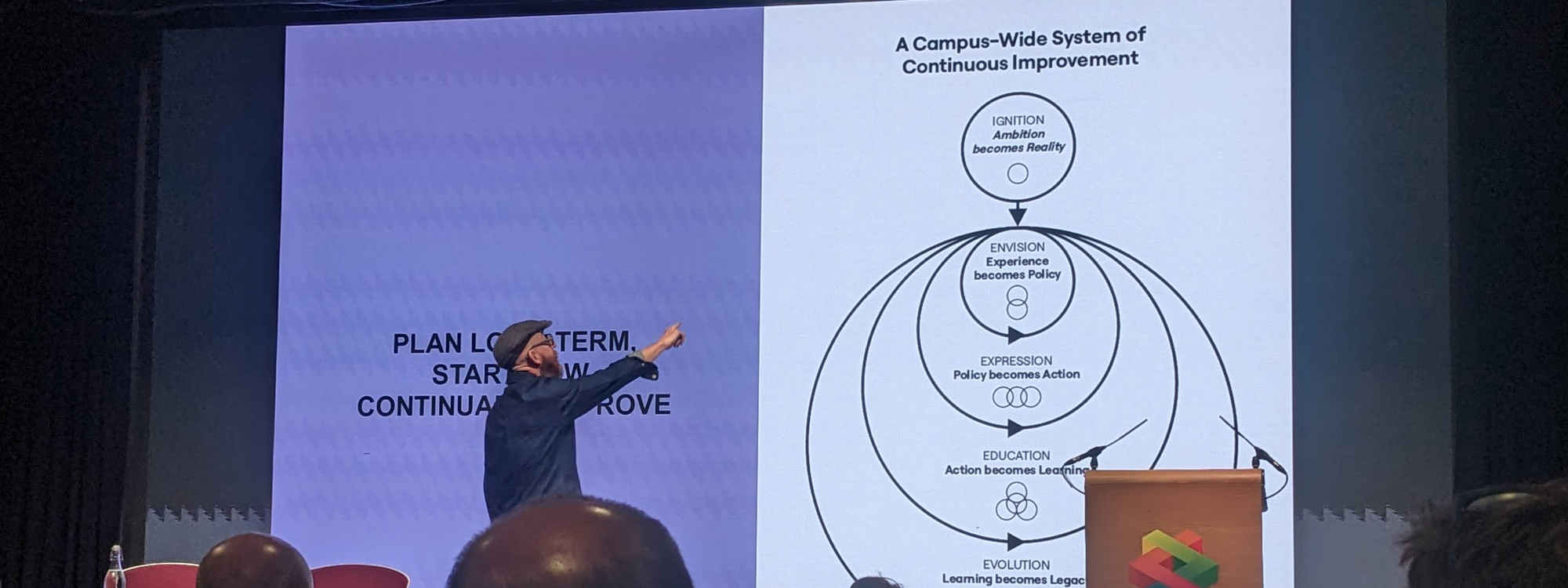
Presentation from the 2025 University Design Forum

Attending the University Design Forum Annual Conference last month left us with a lot to reflect on. Focusing on ‘Back to the Future: University Design: Past Present and Future’, we were challenged to think about how we shape places that continue to serve evolving communities over time.

One of the strongest provocations came from the Antwerp case studies. Simplicity and robustness in design deliver far more value, both socially and financially, than many of our more complex and costly buildings in the UK. Buildings constructed at around £2,000 per square metre using rectilinear forms, natural ventilation, and basic, well-detailed materials aren’t just cost-effective – they are better used.

The conference also reminded us that reuse has huge potential, whether of buildings, materials, or existing campus infrastructure. Some of the most successful spaces are the ones that have been made to work and repurposed with intention. Reimagining entrances or underutilised buildings can be more impactful than an expensive new build.
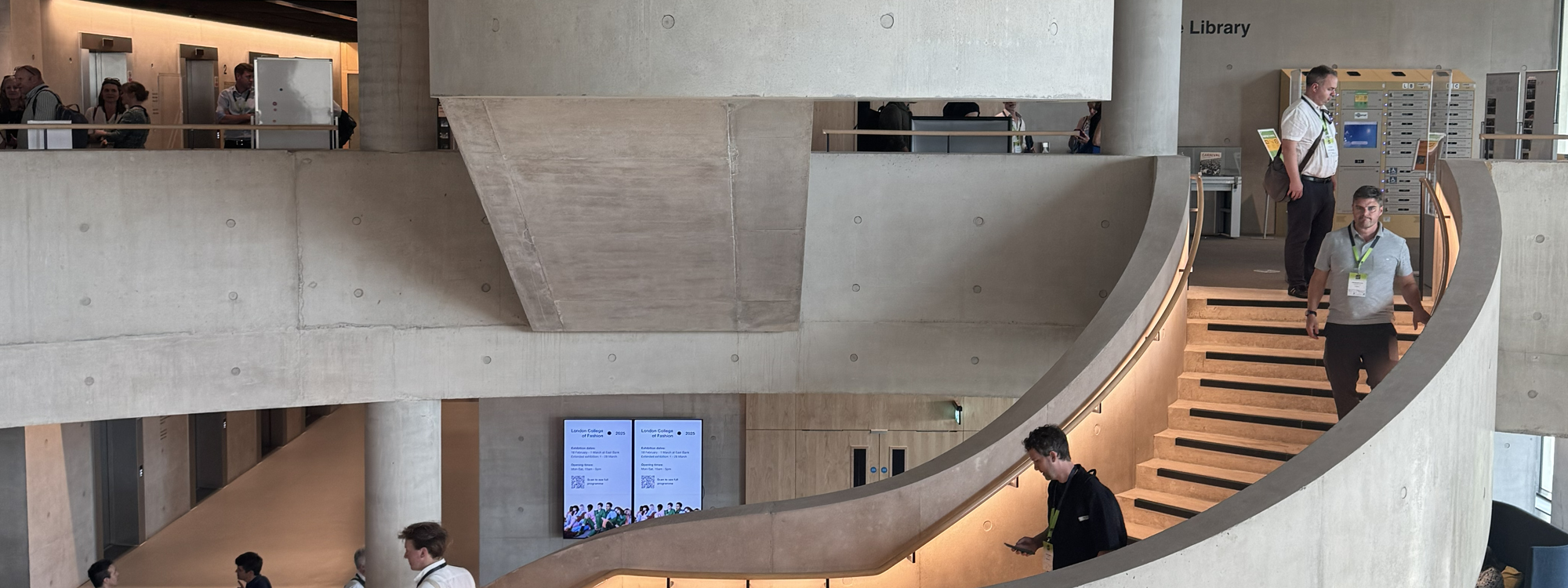
Cement spiral staircase at the 2025 University Design Forum

Design flexibility

Adaptability surfaced repeatedly. Are lecture theatres even necessary anymore? With declining on-campus attendance and a growing culture of digital flexibility, we are questioning the very spatial typologies we rely on. Reiach and Hall Architects reminded us that masterplanning should be about long-term frameworks, not fixed plans. Strategies must evolve with institutions and their communities, and remain open to engagement throughout their life. Adam Scott captured it perfectly: “Engagement first, red line last.”

Professor Peter Madden, OBE pushed us further when he asked what it really means to design for the future. Not the abstract future, but real, emerging trends like AI in education, holograms in lecture halls, declining birth rates, and rising temperatures. Reflecting on R. Buckminster Fuller’s saying, “We are called to be architects of the future, not its victim”, Madden posed the question: “Who are we designing for? Who owns the future?”. He argued that if we don’t shape it with intention, it will be shaped for us, more likely in ways that exclude rather than include.

For us as a studio, the key takeaway confirms that thoughtful, future-focused design doesn’t require complexity. Simplicity is often the most impactful strategy; with reuse delivering more value than starting from scratch and adaptability being embedded from the outset, not retrofitted later. Designing for the future means embracing uncertainty and designing spaces that continue to respond to their users, context, and purpose. We couldn’t agree more!

Read more about the key topics and expert lineup here.

Bridging purpose and excellence

Insights from Catherine Ramsden’s IABSE Annual Lecture, integrating social purpose with design excellence.

On 29 May, our Founding Director Catherine Ramsden delivered the IABSE Annual Lecture, ‘Through the redline’, sharing valuable insights on integrating social purpose with design excellence. Her presentation addressed how the built environment industry can move beyond traditional metrics toward more holistic approaches, prioritising long-term impact and environmental responsibility.

A unique perspective on industry transformation

Catherine brought her distinctive perspective to the IABSE platform, drawing from her leadership of an award-winning B Corp and Social Enterprise that is renowned for delivering projects that stretch well beyond their boundaries and notional ‘redline’. Her approach bridges architectural innovation and community impact, offering rigourous frameworks for addressing the industry’s most pressing challenges.

Taking a journey through her work commencing with Mission Bay, California with efforts to rewild the natural wetlands, to loop in the positive ripple effects of the Millennium Bridge while at Foster + Partners and landing with current ambitions to propel material reuse in the recent salvaged steel pedestrian bridge and Brunel Engine Shed retrofit.

The discussion reinforced the sector’s readiness for approaches that balance rigorous technical standards with environmental responsibility and social impact, providing practical pathways for professionals seeking to create more meaningful outcomes through their work.

Watch the full lecture on YouTube.

Dome-in-a-day

As part of the year-long Wren 300 celebrations, we organised a workshop where 80 students built a replica of the St Paul's Cathedral dome.

As part of the year-long Wren 300 celebrations, and together with Expedition Engineering and London Diocesan Board for Schools, Useful Studio helped organise a workshop where 80 students built a replica of the St Paul’s Cathedral dome.

A time-lapse video of the student’s fantastic structure can be seen below. In line with our circular principles, all materials were recycled including 2200 foam bricks, donated to the Oxford House community arts space in Bethnal Green.

A big thank you to BBC London for broadcasting the story and the Royal Academy of Engineering for funding the project and the below video.

Berkeley Foundation football match

Raising money so young people and their communities will have the tools and resources to thrive and be a force for change.

We were delighted to join the Berkeley Foundation, Demelza Hospice Care for Children, and our colleagues from across the Useful Simple Trust for a friendly five-a-side football match.

The Berkeley Foundation is the independent charitable foundation set up by the Berkeley Group in 2011. All their resources are used to support organisations, young people and communities to have a positive impact in the areas where the Berkeley Group works.

Volunteering at BeeUrban

Volunteering with our colleagues at the Useful Simple Trust for our annual Summer Social.

Taking a break from business as usual to join our colleagues at the Useful Simple Trust for a buzzing volunteering experience at BeeUrban.

The Social Enterprise aims to work with communities to improve the environment for the benefit of us all with a focus on responsible urban beekeeping, horticulture and community growing.

As part of our volunteering, we learnt all about mulching, composting, and harvesting while assisting to make new pathways, construct beehives, creating a green roof, pruning and clearing the site at Kennington Park.

Joining Grosvenor’s Supplier Mentoring Programme

We are committed to achieving the gold standard of climate pledges and taking meaningful climate action.

As part of our net zero commitment, we are proud to be part of the Grosvenor’s Supplier Mentoring Programme, working alongside over 29 SME’s across the UK as they work towards a science based target.

The Programme aims to take SMEs on a net zero journey, connecting them with experts in sustainability to learn at five workshops over eight months, with clinic sessions in between. This is covered across five areas:

  1. The business case for net zero and committing to a science based target,
  2. Calculating a baseline,
  3. Setting an action plan,
  4. Achieving a validated science based target,
  5. Offsetting

By joining the mentoring programme, we are committed to achieving the gold standard of climate pledges and taking meaningful climate action.

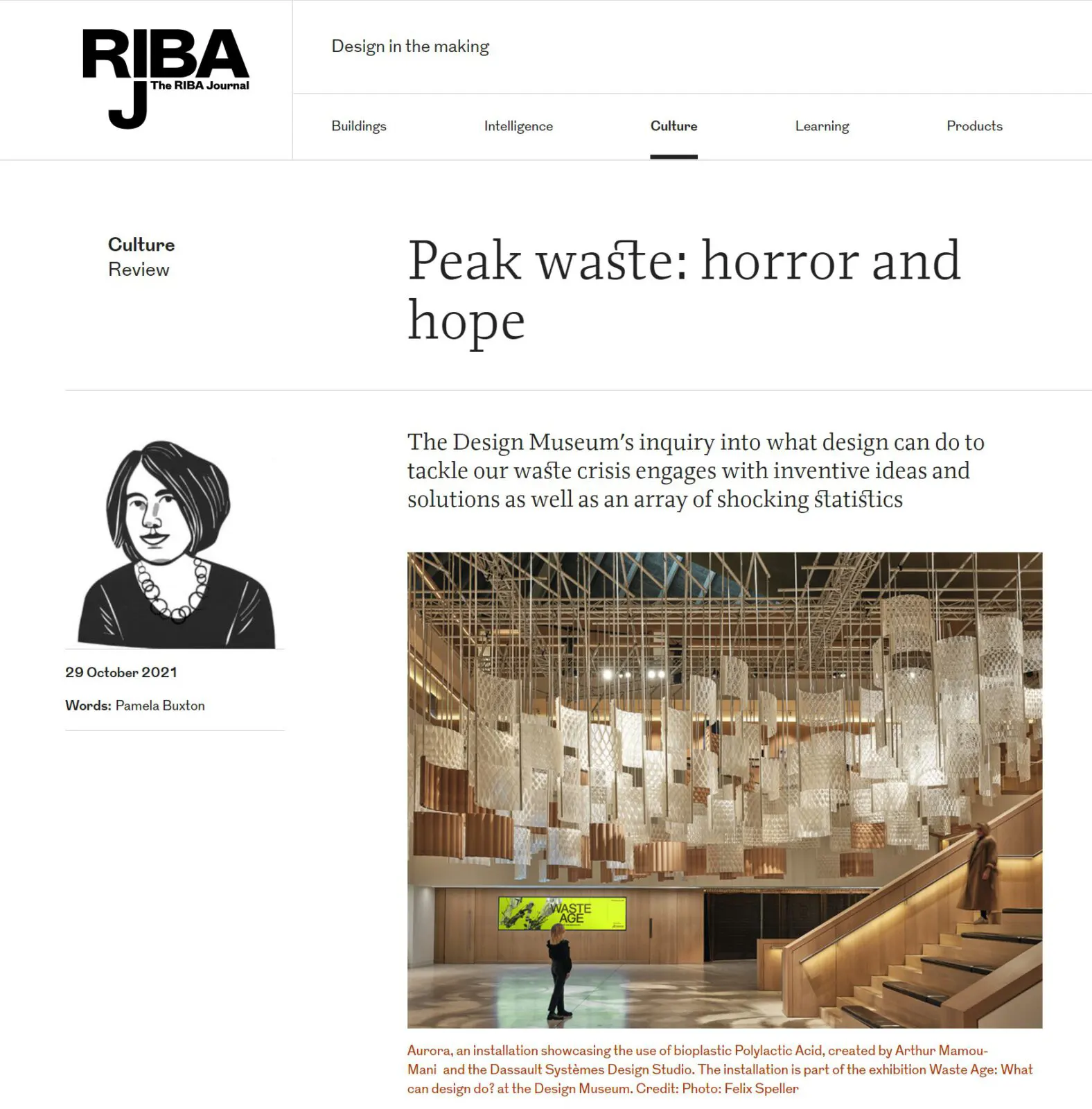
Waste Age at The Design Museum

Touring the Design Museum's new exhibition, 'Waste Age: What can design do?', to rethink the way we produce and consume.

Waste Age at The Design Museum

Delighted to see the RIBA Journal’s  latest article, ‘Peak waste: horror and hope’, as it came face to face with the shocking statistics of our waste crisis at The Design Museum.

The article takes a walk through the new ‘Waste Age: What can design do?’ exhibition seeks both to show how such disastrous wastefulness has happened, and to ‘explore what design can do to rethink the way we produce and consume’.

Featuring a collection of work by Sophie Thomas, the Director of Circular Economy at Useful Simple Trust, we were able to tour the space with students earlier this term – declaring this exhibition as the most transformative moment for them in their understanding of the waste challenge.

Dorking Rugby Club opening

Delighted to celebrate the opening of the new sports rehabilitation and medical centre, promoting fitness, health, and collaboration.

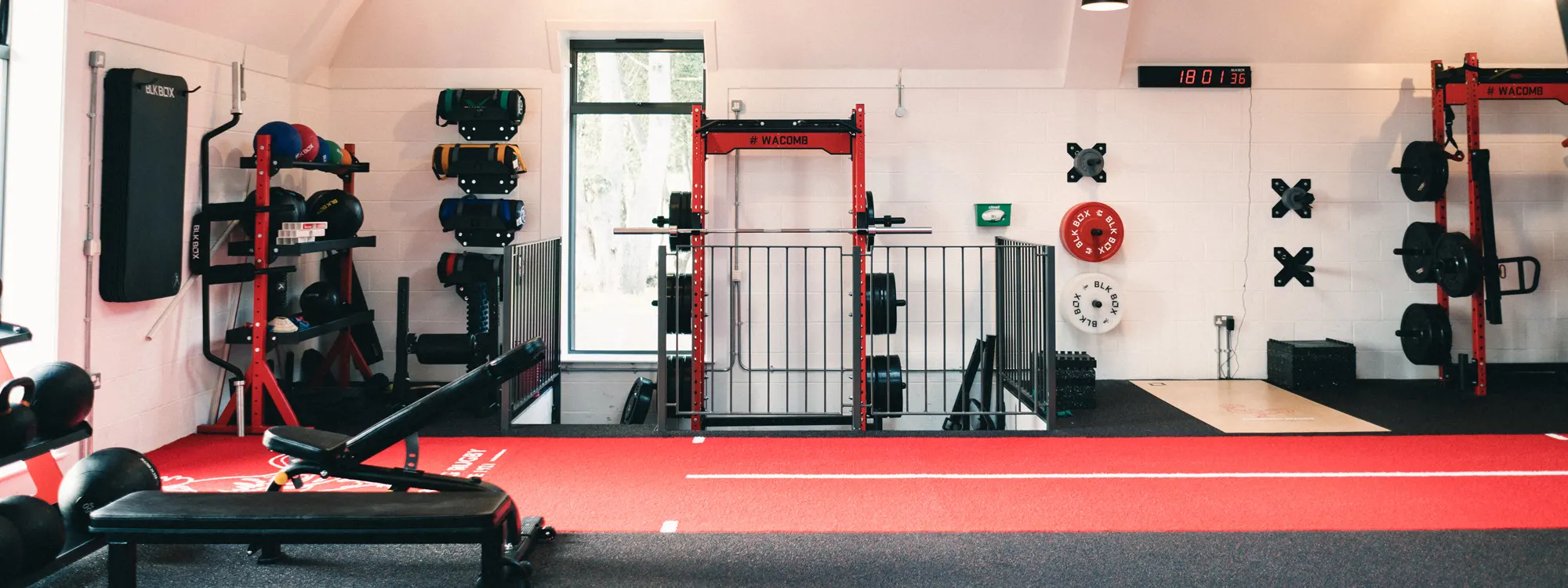
Interior of the new gym facilities at Dorking Rugby Club

We are delighted to celebrate the opening of the refurbished Dorking Rugby Club.

As a small project with huge impact, this new sports rehabilitation and medical centre will make promote fitness, health, and collaboration amongst the local community.

The Club’s transformation has enabled the teams to thrive, members to increase, and a significant uptake in use by the wider community for parallel functions.

The club, whose alumni includes internationals in both the male and female game, had an ambition to deliver an innovative inclusive fitness and recovery centre, incorporating workout, physio, education, and breakout spaces.

Hats off to the Dorking Rugby Club for steering this project to completion with such passion and courage.

Supporting London Reclaimed

Supporting a local charity this Christmas, providing a springboard into long-term employment.

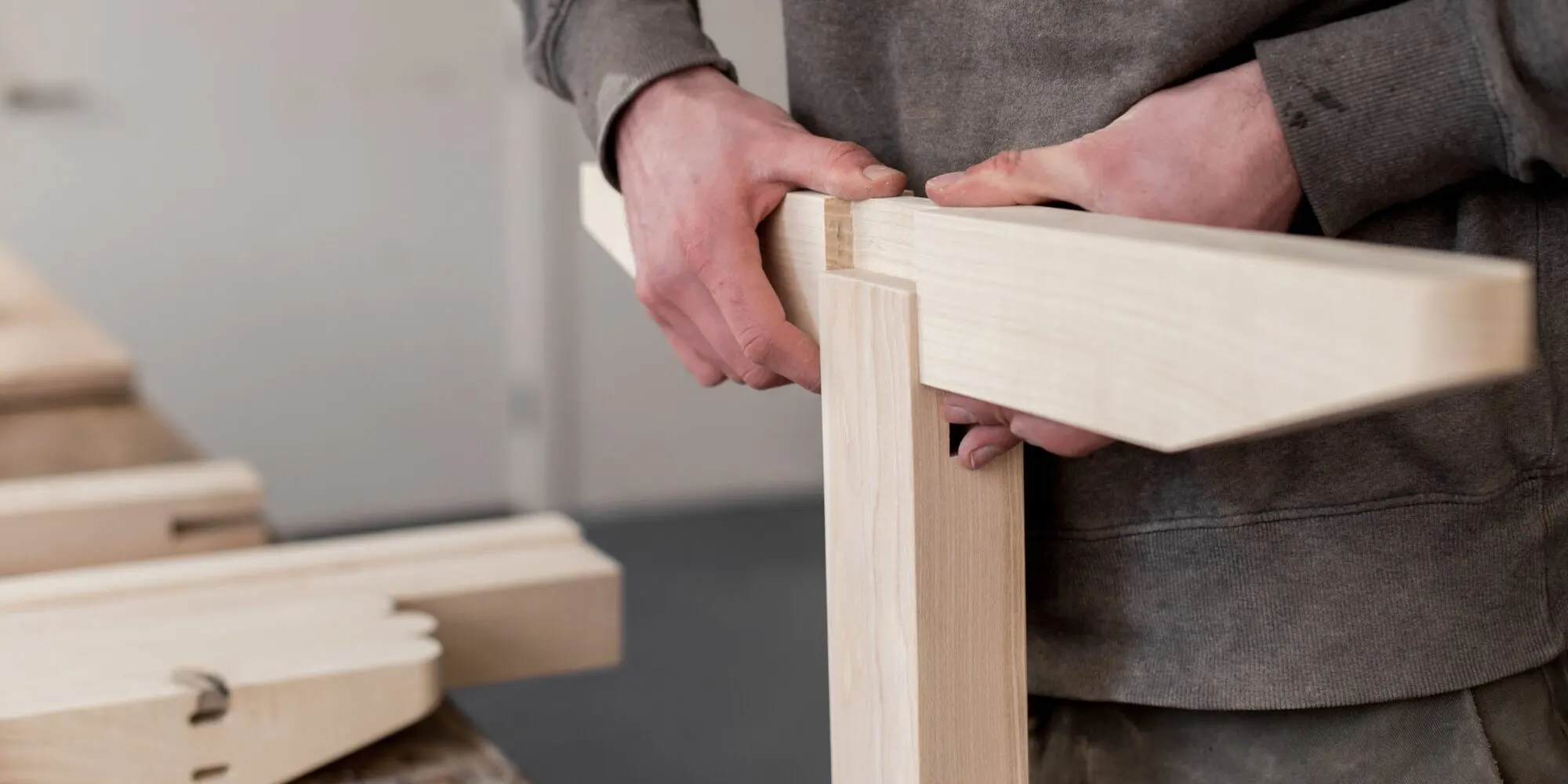
Image of carpentry with London Reclaimed

This Christmas, Useful Studio and the Useful Simple Trust, are delighted to be supporting local charity London Reclaimed, who provide young disadvantaged people in Southwark with the opportunity of a first job and training, and a springboard into long term employment. They focus on joinery skills and making furniture using reclaimed and sustainable materials; an approach that aligns

We collaborated with London Reclaimed on the Butlers Wharf design competition earlier this year and have seen first-hand the social value they create.