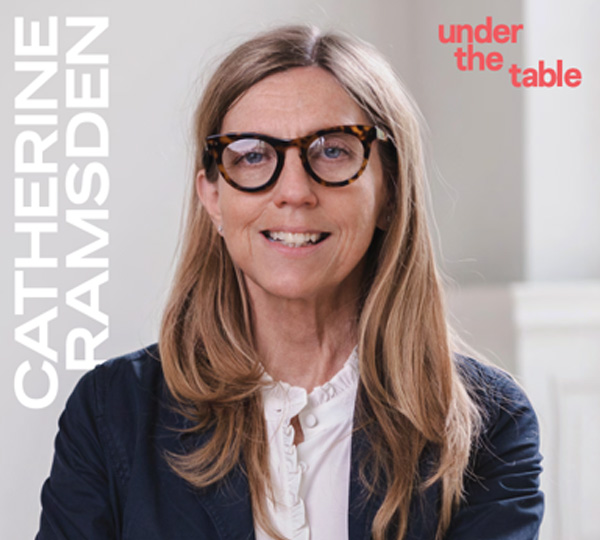
Under the Table with Catherine Ramsden

A series of conversations with leading architects and designers. It aims to explore the experiences and influences from childhood onwards that shape a practitioner.

Under the Table with Catherine RamsdenUnder the Table is a series of conversations with leading architects and designers. It aims to explore the experiences and influences from childhood onwards that shape a practitioner. The series takes its name from the place Roger Tyrrell, and I’m sure many of us, first experienced the essentials of dwelling – under his parents’ kitchen table as a young child.

In this episode, we spoke with Catherine Ramsden, the Founding Director of Useful Studio, a multi-disciplinary collective of architects, engineers, and sustainability consultants working from a single open studio in London.

The practice is structured as an employee benefit trust and registered B Corp, a model Ramsden describes as a condition for freedom. Since founding the studio in 2013, she has led projects ranging from lean retrofit for heritage commercial assets to a family of motorway gantries for National Highways, and co-chairs the B Corp Built Environment Group. She sits on the National Highways Strategic Design Panel and the Dean’s Council at the University of Pennsylvania’s Weitzman School of Design. In 2025 she delivered the IABSE Annual Lecture, titled Beyond the Red Line and sits on the IABSE UK Executive Committee.

Before all of that, she was job captain on the Millennium Bridge in central London while at
Foster and Partners.

First Encounters

SOLUS: What was your first apprehension of architecture?

CATHERINE: It wasn’t really architecture. It was more construction, I would say, and materials. We had an opportunity when I was in high school, a careers course where you could visit a workplace. We went to law offices and accountants, but we also went to a steel mill. This visit left the biggest impression and made me most excited about what was possible in the world: to work with materials and resource, to be careful and respectful of those materials, and understand their potential, for cities, bridges and buildings. It was about craft, making and problem solving, really.

SOLUS: That respect for materials, that sense of responsibility toward them, where does it sit for you now?

CATHERINE: I feel humbled by them, genuinely. The behavioural shift in the studio is to look for a resource that exists already, or that is not interfered with, in its purest and most honest form, and go there first. Change the design sequence so that we capitalise on what exists before we start demanding new extraction. And be rigorous when considering new, highly machined and processed products that are manipulated to get to something then declared as innovative and circular. I’m not sure we’re doing the right thing with that approach. I’m interested in clients and organisations that have extensive assets already alongside new needs, and how to transition what exists, if redundant or outdated, into a new use that better deals with the challenges we’re facing. The beauty of something like tile: there’s a huge level of respect, longevity and performance, and you think, why would I create an overly complicated version of this? It’s so considered already.

SOLUS: Does your upbringing feed into this as well?

CATHERINE: Without doubt. We did a lot of travelling, road trips really, quite pared back. We spent time in tents; a lean approach, in nature. My father was a rocket scientist, a jet propulsion engineer, with an equal appreciation of technology, innovation and science alongside nature and spending time in the mountains.

When we were in Colorado, we visited a solar village. This is ages ago, before all the contemporary discussions around sustainability. There was a whole village geared around utilising energy as a natural resource to power homes: solar, and also trombe walls, which are thermal walls behind a glass pane that gather energy through the day and emit it through the night. It was this link between lean living in a tent, the ability to harness climate to create places to dwell, and my love of materials. I think that led me to consider architecture.

SOLUS: Your father sounds like a significant figure.

CATHERINE: He was. There was regularly a selection of partially assembled VW Beetles in the driveway. A solar hot water experiment in the garden, and making our own furniture. Taking care with materials, a sensitivity to climate and nature, with an overlay of innovation and technology. A spirit of experimentation. We had significant independence as kids, a lot of roaming around
and time for curiosity. I underestimated how much an impression this would make.

SOLUS: And your mother?

CATHERINE: She was a nurse, a children’s nurse. Very musical, excelling in history, and cooking, all the things I’m not particularly good at. But she had that same sense of not being wasteful. It was never an indulgent upbringing. There was a consistent set of behaviours around making the most of what we had. I talk about my father as the more obvious influence, but that quiet sense of responsibility and care, doing more with less… this could have been even more influential. When I go to a building and meet a client, I think: what have you got already? How can we problem-solve with the lightest touch? That’s her, I think.
Read the interview in full here.

New report evidences the need for coordinated change on embodied carbon

The Evidence Report summarises findings shared during the Embodied Carbon Summit on 5 November 2025.

London, 5 February 2026, The UK construction industry knows how to cut embodied carbon, but progress has stalled due to policy gaps, inconsistent standards, and economic misalignment, according to a new report published today.

The Embodied Carbon Summit Evidence Report summarises findings and evidence shared by developers, engineers, architects, local authorities, insurers and academics during the Embodied Carbon Summit, that was held on 5 November 2025. The summit was a cross-industry event convened in response to AECOM’s study, The practical, technical and economic impacts of measuring and reducing embodied carbon in new buildings, which was written for the Ministry of Housing, Communities and Local Government earlier in the year. Today’s report finds that summit participants broadly agreed that embodied carbon reduction is achievable using existing tools and standards in the UK, but requires systemic changes in order to scale.

Initiatives such as the UK Net Zero Carbon Buildings Standard, Part Z, the updated RICS Professional Standard on Whole Life Carbon Assessment (2nd edition) and benchmarking work by the Future Homes Hub were highlighted as helping gain recent traction. However, summit participants warned that voluntary action alone will not deliver change at the speed needed.

Participants called for near-term government signals, including national consistency in whole-life carbon methodologies, investment in shared data infrastructure, and a phased approach to regulation that pushes industry forwards while allowing it to adapt.

Several concerns were also raised that the consequences from a lack of regulation providing a consistency of approach are rarely discussed and researched – such as the observed impact of different Local Authorities introducing different requirements on embodied carbon.

The Embodied Carbon Summit Evidence Report summarises the discussions that happened during the event, and groups practical, technical, and economic considerations to mirror AECOM’s research. While today’s report avoids making any specific policy recommendations, it’s clear that industry capability has advanced significantly in recent years, and the sector is now ready for national policy to accelerate further change.

The event and report were supported by the Happold Foundation, the Institution of Structural Engineers, UK Green Building Council, Royal Institution of Chartered Surveyors, Royal Institute of British Architects, and Chartered Institution of Building Services. Over 50 participants from across the construction industry attended the summit, joined by policymakers and civil servants.

“The debate over whether we can cut embodied carbon is over – the evidence shows that the industry is ready and already doing it. What we need now is clear government leadership: a national direction set by government to give our industry a whole‑life carbon backbone. Phased regulation will turn industry readiness into delivery at scale.” 

Will Arnold, Head of Sustainable Materials at the Useful Simple Trust. Convenor of the summit under his former position as Head of Climate Action at the Institution of Structural Engineers.

Tom Newby, Trustee for the Happold Foundation, commented:

“Making significant reductions to the embodied carbon emitted by the UK construction sector is absolutely critical for achieving the UK climate commitments and one of the great challenges facing our industry. It is vital that both the industry and the UK government do all they can to meet this challenge. The Happold Foundation is proud to support this summit and the subsequent report exploring the latest evidence and solutions.”

Yasmin Becker, Chief Executive at the Institution of Structural Engineers, said:

“The Institution was pleased to convene the Embodied Carbon Summit 2025 and welcomes the publication of the report on it. It marks another step in the Institution’s commitment to put sustainability on par with structural safety and highlights the importance of addressing the practical, technical and economic impacts of measuring and reducing embodied carbon. This report provides powerful evidence for policymakers addressing the urgent need to introduce regulation and legislation to support the industry in meeting UK and global climate commitments. The Institution will continue to call for embodied carbon to be regulated around the world to meet these aims.”

Philippa Birch-Wood, Head of Climate Action at the UK Green Building Council, said:

“UKGBC and members, alongside the wider sector, have been working to build the technical foundations for tackling embodied carbon. This summit reinforced that reducing embodied carbon is achievable, and industry is ready to deliver. We now need clear government direction to turn this readiness into real-world impact and reduce whole-life carbon across our sector.”

Charlotte Neal, Director of Professional Practice and Research at the Royal Institution of Chartered Surveyors, said:

“The report provides an extensive overview of the Built Environment Industry’s response in taking concrete steps to improve the consistency and quality of carbon assessments, showcasing its readiness for the regulation of embodied carbon in buildings. Without regulation, a large share of emissions from construction activities are left unchecked and cannot be reduced in line with the UK decarbonisation targets. This is why it’s important to demonstrate the range of solutions that the industry has developed to make carbon assessments clear, reliable, and ready for a large-scale roll-out.”

Chris Williamson, President at the Royal Institute of British Architects, said:

“Many architects are already designing lower-carbon buildings and using whole-life carbon tools and standards – but this report makes clear that the industry is ready to go further. However, voluntary action alone will not deliver the revolution needed to cut embodied carbon. The Government must provide a clear direction of travel – and bring forward the promised consultation on embodied carbon in the built environment. This would give developers, clients and practitioners much needed certainty while accelerating the transition to a low-carbon built environment.”

Dr Julie Godefroy, Head of Net Zero Policy at the Chartered Institution of Building Services, said:

“This report is a timely and important reflection of how far industry capability on embodied and whole-life carbon has progressed, and of the need for coordinated action to unlock further change. CIBSE is pleased to have worked alongside partners across the sector in providing practical leadership – through guidance such as TM65, our whole life carbon assessment training, and our joint work on initiatives including Part Z and the UK Net Zero Carbon Buildings Standard. Together, these efforts demonstrate that the tools, skills and expertise already exist, and that national consistency and clear policy signals are now needed to accelerate delivery at scale.”

-ENDS-

Embodied Carbon Summit Evidence Report

Resource efficiency in the built environment

Catherine Ramsden joined the discussion with Circular., diving into the era where sustainability is no longer optional but imperative.  

Catherine Ramsden, the Studio’s Founding Director, joined the discussion with Circular., diving into the era where sustainability is no longer optional but imperative.  

In March, the United Nations warned that material extraction is expected to rise by 60% in 2060 – and this could ‘derail’ efforts to achieve global climate, biodiversity, and pollution targets as well as prosperity and human wellbeing.

The Circular Economy Foundation’s latest Circularity Gap Report found that the global circularity rate is falling, and we are consuming more virgin materials than ever – so our efforts to design better products and systems are currently dwarfed by global consumption.

Reflecting that the buildings and construction sector is the largest emitter of greenhouse gases at 37% of global emissions, Catherine commented:

“[we] now seem to have a better understanding of what embodied carbon associated with materials means, that there is a finite supply of resource, and that we have got to stop extracting it – and try to behave better. I think there is a big focus on measuring carbon and perhaps not enough about simply reducing it, and what we call lean design.”

In simple terms, Useful Studio, with colleagues in the wider Useful Simple Trust, create architectural and engineering solutions that use less stuff. To which Catherine added, “And that takes a rigour in design thinking, and sometimes more time.”  

Our 2023 Impact Report is now available

The Useful Simple Trust’s 2023-24 Impact Report focuses on the theme of ‘circularity.

Useful Studio 2023 Impact Report

The Useful Simple Trust (UST) is proud to share our 2023 Impact Report. This year we are focusing on the theme of ‘circularity’, showcasing how our work to create regenerative and circular buildings, strategies, and places is really delivering impact on the ground.

The Construction sector is the biggest consumer of raw materials and generator of waste, responsible for 62% of waste and 50% of material use in the UK. The worsening climate and biodiversity crises require accelerated action and systemic change. Industry practice is far from aligned with carbon budgets under the Paris Agreement, and research we recently carried out with the Institution of Civil Engineers highlighted the unseen impacts on biodiversity of our industry’s extractive processes.

The key principles of a circular economy: eliminating waste and pollution, circulating products and materials at their highest value, and regenerating nature, offer one pathway to transitioning our built environment. We work in collaboration with clients and professional teams who have a shared ambition to refurbish, retrofit and repurpose existing buildings, extend the life of built assets, design out waste, and use materials with the lowest possible environmental footprint.

This Report presents some of the achievements we are most proud to share with you.

Read the Report here.

Launching our 2022-23 Impact Report

We are excited to announce the release of our 2022 Impact Report.

Today is a big day for us here at Useful Studios and our parent brand, the Useful Simple Trust!

We are excited to announce the release of our B Corp UK impact report document. As a B Corporation, we are committed to using the power of the built environment to solve social and environmental problems. This report details the ways in which we are working to make a positive impact on the world through our skills, services, and operations.

In this report, you will learn about our progress in key areas such as sustainability, education and inclusion, and community engagement. You will also see our ambitious plans to reduce our environmental footprint and support the communities where we do business.

We believe that companies have a responsibility to do more than just make a profit. We are proud to be part of the B Corp community and to be working towards a better future for all.

Thank you for your support and for helping us to make a difference.

Grab yourself a full copy of the report here.

Waste Age at The Design Museum

Touring the Design Museum's new exhibition, 'Waste Age: What can design do?', to rethink the way we produce and consume.

Waste Age at The Design Museum

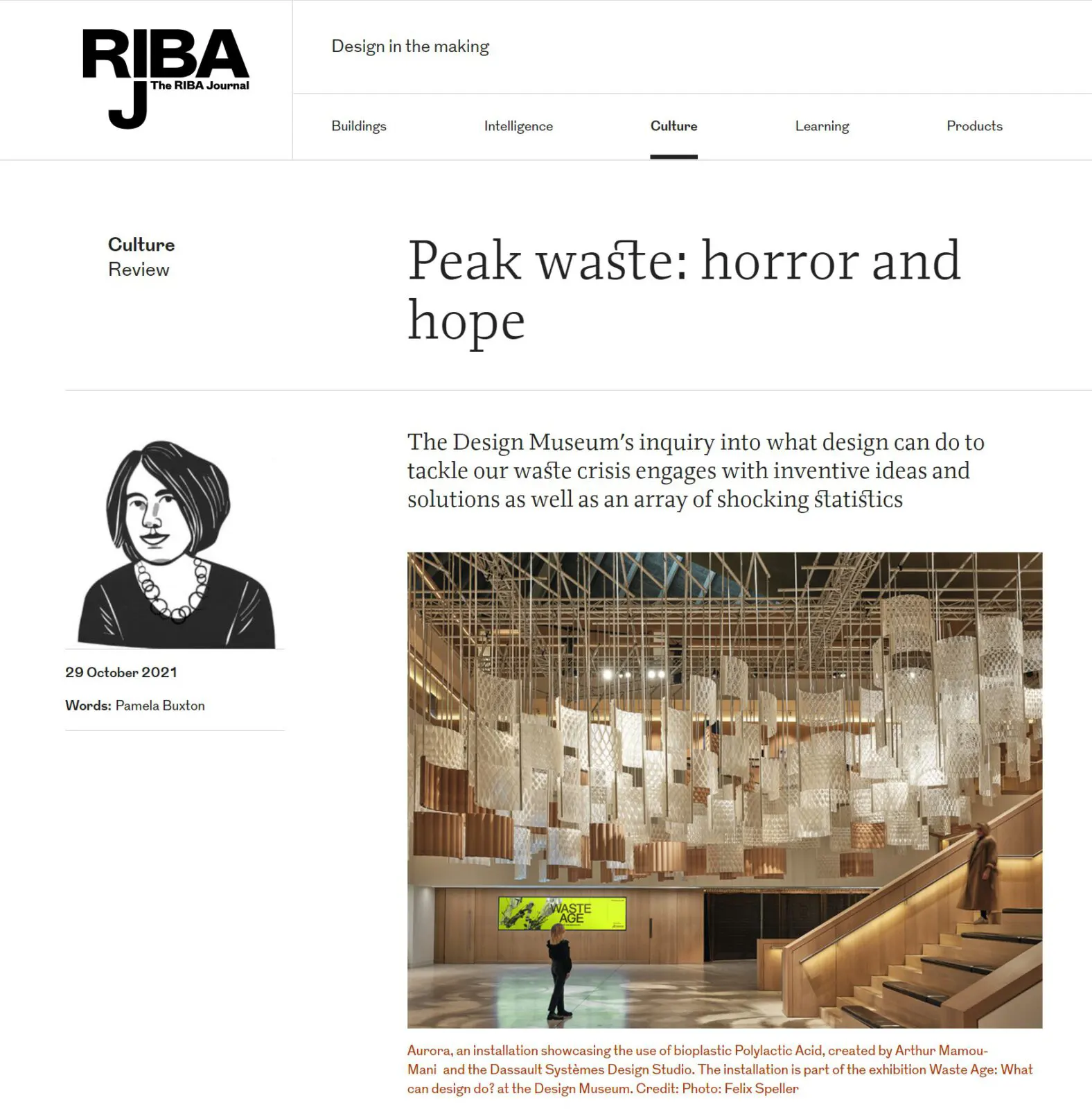
Delighted to see the RIBA Journal’s  latest article, ‘Peak waste: horror and hope’, as it came face to face with the shocking statistics of our waste crisis at The Design Museum.

The article takes a walk through the new ‘Waste Age: What can design do?’ exhibition seeks both to show how such disastrous wastefulness has happened, and to ‘explore what design can do to rethink the way we produce and consume’.

Featuring a collection of work by Sophie Thomas, the Director of Circular Economy at Useful Simple Trust, we were able to tour the space with students earlier this term – declaring this exhibition as the most transformative moment for them in their understanding of the waste challenge.