Our 2025–26 Impact Report is now available

Reflecting on our continuing journey towards a more regenerative business model and design consultancy.

What does it mean to be useful in a changing industry?

This year’s report brings together the work, ideas, and conversations that have shaped the Useful Simple Trust over the past year – from projects delivered to the ways we are challenging ourselves to work differently.

At the heart of this is our purpose: to transform our industry so that it delivers greater value to society and the planet. As a Certified B Corporation, we are committed to continually measuring and improving our impact across our business, people, communities, and the environment. This report is a chance to reflect on our progress, be transparent about where we can do better, and share what we are learning along the way.

We invite you to explore the report and discover more about the people, projects, and thinking behind our work over the past year.

Read the 2025-26 Impact Report

Nature, infrastructure, and the choices we make

Estelle Bailey reflects on place-based strategies unlocking nature recovery, climate resilience, and stronger social outcomes.

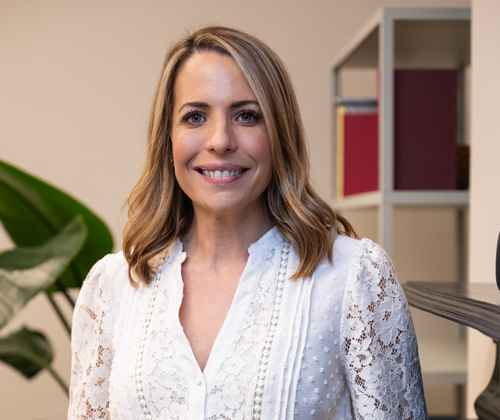
Estelle Bailey - External TrusteeWith over two decades of experience at the intersection of nature, place, people, and the built environment, Estelle Bailey MBE brings a systems-thinking lens to some of today’s most pressing challenges. As Chief Executive of Berks, Bucks & Oxon Wildlife Trust and External Trustee at the Useful Simple Trust (Trust), she has long championed joined-up approaches to environmental and social change.

Here, Estelle reflects on how place-based strategies can unlock nature recovery, climate resilience, and stronger social outcomes:

When travelling between Oxford and Cambridge, I often find myself looking out of the window more than I probably should. It’s a landscape I know well: fields stitched together by hedgerows, rivers moving quietly through the land, pockets of woodland holding on. On a good day, a red kite hangs in the sky, or a hare moves quietly along a field margin; half seen, gone in a moment. It’s beautiful, but fragile. And once you start to see it like that, it’s hard to unsee.

These landscapes have been hard worked for generations to produce food. A lot of it. Alongside this, we’ve seen significant population growth coupled with an increasingly intensive and often unsustainable land use. New settlements, such as Milton Keynes, were deliberately designed with the future in mind and are now ready for their next evolution. This is also a highly water-stressed part of the country. How water moves, is absorbed and stored is not a secondary consideration; it’s fundamental.

A brown hare in nature, courtesy of Sue WoodNature as infrastructure, not an afterthought

I’ve spent much of my career working in nature conservation, focused on restoring what’s been lost and protecting what remains. More recently, I’ve found myself drawn deeper into the built environment, not as a departure but as a realisation.

The way we design and build our towns, infrastructure, and buildings is one of the most powerful forces shaping the future of nature. This is what drew me to my Trustee roles at both the Trust and UK Green Building Council (UKGBC).

If we’re serious about nature’s recovery, we have to change the system that’s driving its decline. The Oxford-Cambridge Growth Corridor brings this into sharp focus. Here is a real ambition. New homes, new infrastructure, new economic opportunities. It matters, but sits within a landscape already under pressure. Wildlife has declined dramatically since the 1970’s; habitats are fragmented, and the natural systems that support water, soil, and climate resilience are being stretched.

I have often seen growth vs nature described as a tension. I don’t think that framing holds anymore. The more time you spend outside, really noticing what’s going on, the more obvious it becomes that nature isn’t something sitting at the edges; it’s doing the heavy lifting.

Nature regulates water when it rains, cools places when temperatures rise, supports the soils that grow our food, and underpins our health and wellbeing. Put simply, nature isn’t just a ‘nice to have’; it’s infrastructure. And yet we continue to design as if it isn’t.

Too often, we build and then we mitigate engineering solutions to problems that better design could have avoided: flooding, overheating, declining biodiversity, poorer health outcomes. For every pound invested in protecting nature, considerably more is spent driving its loss. This is a deeply flawed system; not an inevitability, but a consequence of choices.

Where does this path lead? To a generation growing up in places dominated by concrete and tarmac, with fewer chances to experience the natural world as part of everyday life, and a gradual resetting of expectations. Degraded nature and climate instability are becoming normal.

Designing with systems, not against them

This trajectory is shaped, in large part, by design. The opportunity in the Growth Corridor is to take a different approach. To start with the land itself, we must understand how water moves, how soils function, where habitats can be strengthened or connected, and recognise that food production, land economics, and nature recovery are part of the same system. They’re not separate conversations.

Nature-led design is not about adding green features at the end of a process. It’s about allowing natural systems to shape the form and function of places from the outset.

It’s here that built environment professions have enormous influence. Architects, engineers, planners, and designers make choices every day that determine whether nature is excluded or embedded; whether materials are extractive or regenerative, and whether buildings and infrastructure work with natural systems or against them.

In Europe, we are starting to see what ‘good’ looks like. In the Netherlands, water and landscape shape development decisions from the very beginning – as structure, not mitigation. In Copenhagen, green and blue infrastructure is designed to manage climate risk while creating better places to live. In Freiburg, whole districts have been built around energy, nature, and livability as a single system. These are signals of a positive approach.

The UK is beginning to build the frameworks to support this shift. The UKGBC’s Net Zero Carbon Buildings Framework has helped bring clarity and consistency across the built environment. Its emerging work on nature and biodiversity is starting to do the same, giving practitioners tools to integrate nature more meaningfully into design and delivery.


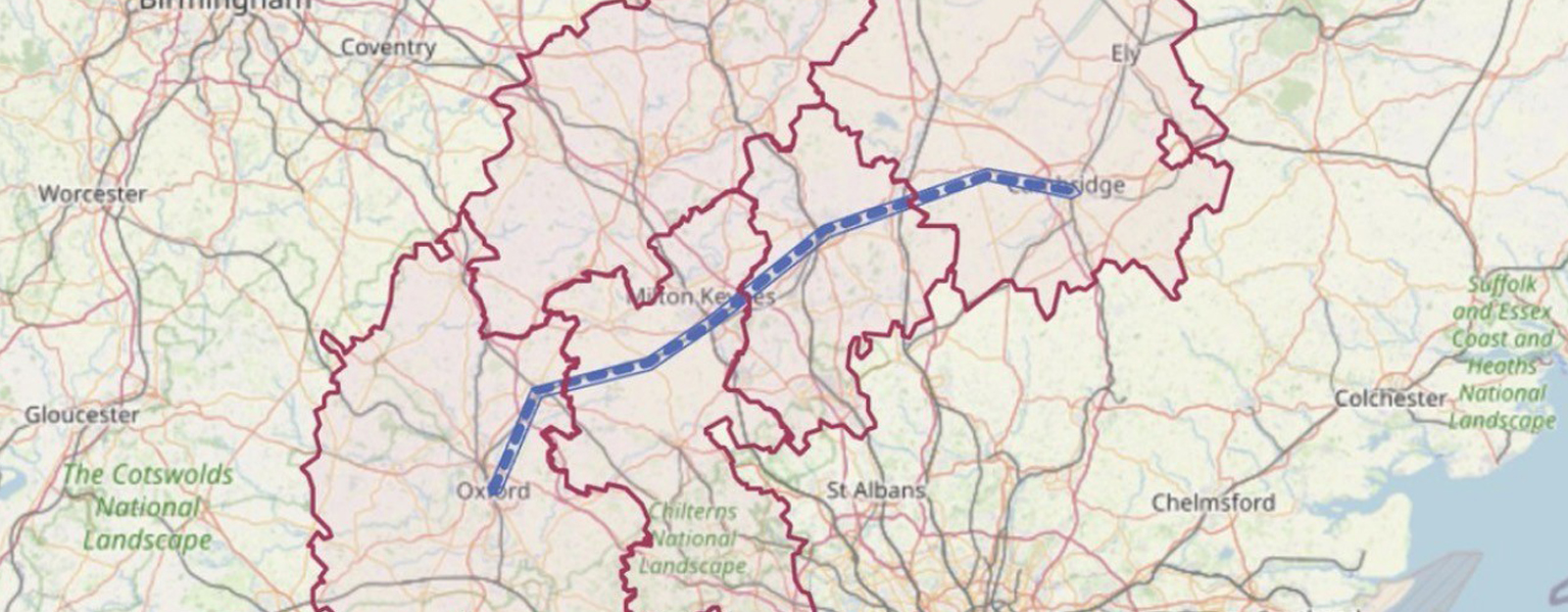
The 100 Miles Wider project map

From frameworks to everyday decisions

But frameworks alone are not enough. The real shift happens when these ideas move into everyday decisions, when nature is considered at the same time as cost, programme, and performance, influencing design from the outset.

That is where organisations like the Trust make a real difference bringing together engineering, design, and environmental thinking to turn intent into action. Helping projects move beyond compliance towards something more regenerative: not perfect solutions, but better ones, grounded in how systems actually work.

For me, this is also personal. About five years ago, I worked with the Trust on the ‘100 Miles Wilder’ project. The idea was simple but ambitious: to show how nature could underpin sustainable growth and living across the Growth Corridor while enabling recovery at scale.

The Trust has remained part of the thinking as this work has evolved. In many ways, this feels like coming full circle. The challenge in front of us is the same, just more urgent: to move from vision to delivery and prove that growth and nature can be designed together, not traded off.

If we could deliver something like the 100 Miles Wilder blueprint, it would be a remarkable achievement not just for the Growth Corridor, but as a model for how we approach growth more widely.

A skylark in flight, courtesy of Darren ChapmanWhat kind of future are we designing for?
I think back to my own childhood, spending hours outside without really thinking about it: fields, rivers, and the freedom to roam. It shaped how I see the world, and why I care about getting this right. It feels like that experience is becoming less common. These days, children rarely venture to the end of the street, let alone the miles of unstructured play time in nature many of us once had.

The Growth Corridor is a strong model for a different kind of future; one where nature is not designed out, but designed in. Where infrastructure includes rivers, soils, and ecosystems alongside roads and buildings; where the places we create actively support both people and the natural systems we depend on.

We know enough now to do this differently. The question is whether we choose to or not.

Celebrating professional growth

Recognising a number of professional milestones achieved by colleagues across our brands.

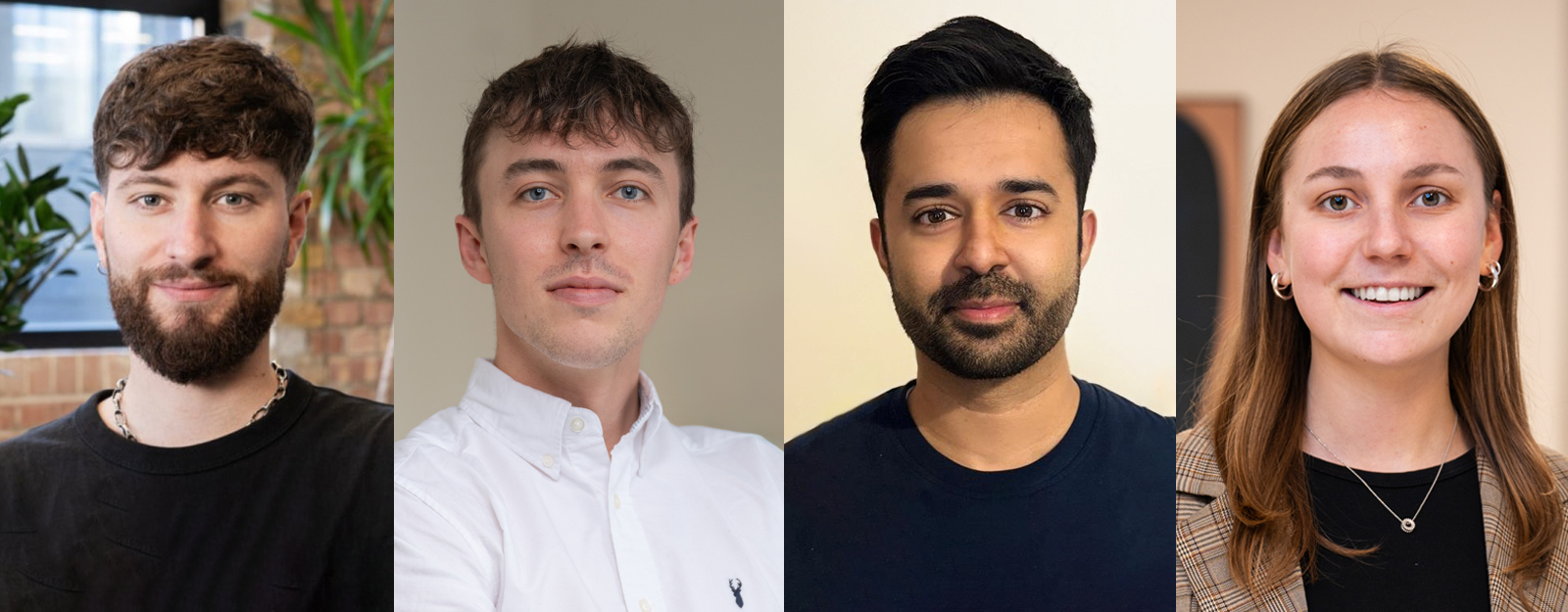
As we approach the end of the financial year, the Useful Simple Trust is delighted to recognise a number of professional milestones achieved by colleagues across Expedition Engineering, Useful Projects, and Useful Studio.

These achievements reflect not only individual commitment and expertise, but also the value we place on creating space for learning and development alongside day-to-day work.

Matteo Attanasio, Senior Structural Engineer

Chartered Engineer – Institution of Structural Engineers

Matteo has achieved Chartered Engineer status (MIStructE), a widely respected professional benchmark within structural engineering. This recognition reflects his technical capability and commitment to the profession, and connects him to a global network of peers, researchers, and practitioners.

John Stirling, Energy Consultant

Certified Passive House Consultant – Passive House Institute

John has qualified as a Certified Passive House Consultant, strengthening his ability to support performance-led design. The certification builds on his expertise in modelling residential energy use and contributes to our wider work in delivering efficient, comfortable, low-energy buildings.

Jaudat Kamran, Commercial Project Manager

Chartered Global Management Accountant – Chartered Institute of Management Accountants

Jaudat has completed his exams on his way to becoming Chartered Global Management Accountant (CIMA), further developing his expertise in financial management and commercial strategy. This qualification supports his role in managing project financials, assessing risk, and contributing to informed, data-led decision-making across projects.

Carolyn Bowman, Senior Sustainability Consultant

Postgraduate Certificate in Interdisciplinary Design for the Built Environment – University of Cambridge Institute for Sustainability Leadership

Carolyn has completed her Postgraduate Certificate with the Cambridge Institute for Sustainability Leadership and is due to graduate later this year. The programme focuses on collaborative, cross-disciplinary approaches to shaping a more sustainable built environment, strengthening both knowledge and leadership skills.

Congratulations to all involved.

Welcoming two new Trustees to the Trust

2026 marks a time of significant change for our Board of Trustees as we welcome two new appointments.

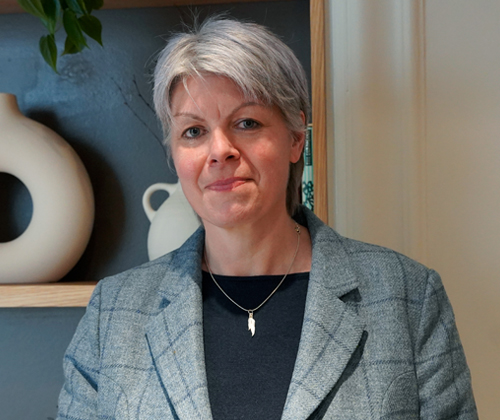
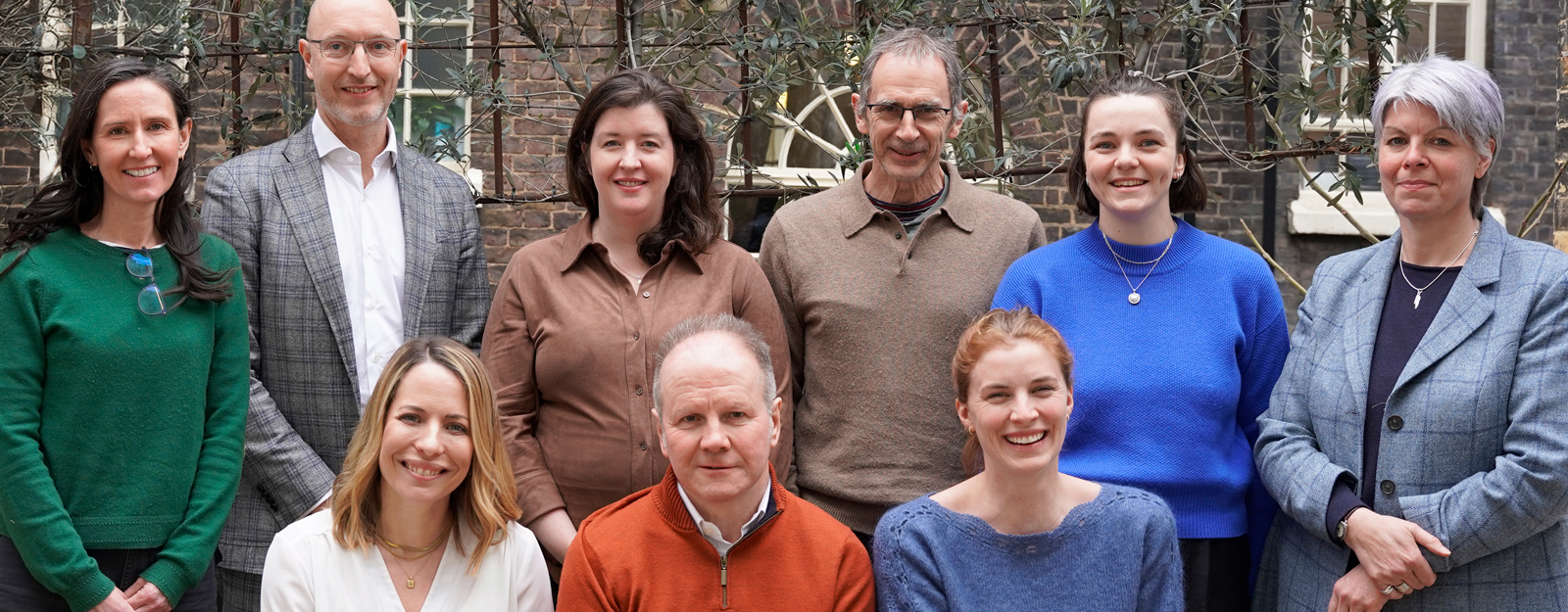
Useful Simple Trust Trustee Board - 2026

We are delighted to announce two new appointments to the Useful Simple Trust’s Board of Trustees – Estelle Bailey and Jo Dobson.

These appointments come as two of our Founding Directors, Sophie Thomas OBE and Ed McCann, step down from the Board after nearly two decades of dedicated service. Their commitment to shaping and upholding the founding principles of the Trust has been fundamental to our journey. Alongside fellow Founders, Chris Wise and Sean Walsh, Ed and Sophie have been instrumental in defining our mission, values, and Ethos. We extend our deepest gratitude to them both for their vision, generosity, and leadership – and look forward to their continued involvement with the Trust in new ways.

Welcome Estelle Bailey MBE

Estelle Bailey - External Trustee

Our new External Trustee, Estelle Bailey, is Chief Executive of the Berkshire, Buckinghamshire and Oxfordshire Wildlife Trust (BBOWT) and a Trustee of the UK Green Building Council.

We have had the privilege of working with Estelle and her team at BBOWT on the 100 Miles Wilder proposal for the Ox-Cam corridor – a collaboration that underscored her ability to connect ecological thinking with practical placemaking and strategic vision.

Awarded an MBE in 2025 for Services to Nature’s Recovery, Estelle brings a wealth of experience in governance, spatial planning, and nature-based solutions. As one of the UK’s most impactful sustainability leaders in the edie 100 list, her leadership across the environmental and charitable sectors has focused on integrating ecology, health, finance, and community wellbeing to deliver resilient, nature-led places.

Judith Sykes, the Trust’s CEO, commented on this appointment:

“Estelle’s appointment marks a progressive and exciting step forward for the Trust, strengthening our regenerative ambitions – bringing the perspective of nature into our governance discussions.”

Welcome Jo Dobson

Jo Dobson - Internal Trustee

We are equally thrilled to announce that Jo Dobson, Director at Useful Projects, has been appointed as our new Internal Trustee.

With 16 years working at the Trust, Jo has long championed our Ethos, particularly the ‘people’ dimension, through her role as Chair of the People Group and a member of the Remuneration Committee. As an established sustainability leader, Jo brings deep expertise spanning social value, ESG, net zero carbon, and the circular economy.

At Useful Projects, Jo leads the business day-to-day, providing strategic advisory to organisations and built environment projects.

She is committed to industry-wide change and thought leadership, contributing to various panels, publishing guidance, and regularly speaking at events. Jo is also an External Trustee for Frosts Landscape Construction.

Reflecting on Jo’s new appointment, Judith commented:

“Jo has always championed our Ethos principle relating to developing the potential of our people. We are looking forward to bringing that perspective into governance as we bring greater focus on our learning culture.”

Looking Ahead

These appointments mark an important moment for the Useful Simple Trust, one that both honours our foundations and looks confidently toward the future. With Estelle and Jo joining the Board, we are better equipped than ever to deliver on our mission: to be a thoughtful, regenerative organisation that builds long-term public value through design, collaboration, and kindness.

We extend a warm welcome to Estelle and Jo, and once again, heartfelt thanks to Ed and Sophie for their enduring vision and contribution.

New report evidences the need for coordinated change on embodied carbon

The Evidence Report summarises findings shared during the Embodied Carbon Summit on 5 November 2025.

London, 5 February 2026, The UK construction industry knows how to cut embodied carbon, but progress has stalled due to policy gaps, inconsistent standards, and economic misalignment, according to a new report published today.

The Embodied Carbon Summit Evidence Report summarises findings and evidence shared by developers, engineers, architects, local authorities, insurers and academics during the Embodied Carbon Summit, that was held on 5 November 2025. The summit was a cross-industry event convened in response to AECOM’s study, The practical, technical and economic impacts of measuring and reducing embodied carbon in new buildings, which was written for the Ministry of Housing, Communities and Local Government earlier in the year. Today’s report finds that summit participants broadly agreed that embodied carbon reduction is achievable using existing tools and standards in the UK, but requires systemic changes in order to scale.

Initiatives such as the UK Net Zero Carbon Buildings Standard, Part Z, the updated RICS Professional Standard on Whole Life Carbon Assessment (2nd edition) and benchmarking work by the Future Homes Hub were highlighted as helping gain recent traction. However, summit participants warned that voluntary action alone will not deliver change at the speed needed.

Participants called for near-term government signals, including national consistency in whole-life carbon methodologies, investment in shared data infrastructure, and a phased approach to regulation that pushes industry forwards while allowing it to adapt.

Several concerns were also raised that the consequences from a lack of regulation providing a consistency of approach are rarely discussed and researched – such as the observed impact of different Local Authorities introducing different requirements on embodied carbon.

The Embodied Carbon Summit Evidence Report summarises the discussions that happened during the event, and groups practical, technical, and economic considerations to mirror AECOM’s research. While today’s report avoids making any specific policy recommendations, it’s clear that industry capability has advanced significantly in recent years, and the sector is now ready for national policy to accelerate further change.

The event and report were supported by the Happold Foundation, the Institution of Structural Engineers, UK Green Building Council, Royal Institution of Chartered Surveyors, Royal Institute of British Architects, and Chartered Institution of Building Services. Over 50 participants from across the construction industry attended the summit, joined by policymakers and civil servants.

“The debate over whether we can cut embodied carbon is over – the evidence shows that the industry is ready and already doing it. What we need now is clear government leadership: a national direction set by government to give our industry a whole‑life carbon backbone. Phased regulation will turn industry readiness into delivery at scale.” 

Will Arnold, Head of Sustainable Materials at the Useful Simple Trust. Convenor of the summit under his former position as Head of Climate Action at the Institution of Structural Engineers.

Tom Newby, Trustee for the Happold Foundation, commented:

“Making significant reductions to the embodied carbon emitted by the UK construction sector is absolutely critical for achieving the UK climate commitments and one of the great challenges facing our industry. It is vital that both the industry and the UK government do all they can to meet this challenge. The Happold Foundation is proud to support this summit and the subsequent report exploring the latest evidence and solutions.”

Yasmin Becker, Chief Executive at the Institution of Structural Engineers, said:

“The Institution was pleased to convene the Embodied Carbon Summit 2025 and welcomes the publication of the report on it. It marks another step in the Institution’s commitment to put sustainability on par with structural safety and highlights the importance of addressing the practical, technical and economic impacts of measuring and reducing embodied carbon. This report provides powerful evidence for policymakers addressing the urgent need to introduce regulation and legislation to support the industry in meeting UK and global climate commitments. The Institution will continue to call for embodied carbon to be regulated around the world to meet these aims.”

Philippa Birch-Wood, Head of Climate Action at the UK Green Building Council, said:

“UKGBC and members, alongside the wider sector, have been working to build the technical foundations for tackling embodied carbon. This summit reinforced that reducing embodied carbon is achievable, and industry is ready to deliver. We now need clear government direction to turn this readiness into real-world impact and reduce whole-life carbon across our sector.”

Charlotte Neal, Director of Professional Practice and Research at the Royal Institution of Chartered Surveyors, said:

“The report provides an extensive overview of the Built Environment Industry’s response in taking concrete steps to improve the consistency and quality of carbon assessments, showcasing its readiness for the regulation of embodied carbon in buildings. Without regulation, a large share of emissions from construction activities are left unchecked and cannot be reduced in line with the UK decarbonisation targets. This is why it’s important to demonstrate the range of solutions that the industry has developed to make carbon assessments clear, reliable, and ready for a large-scale roll-out.”

Chris Williamson, President at the Royal Institute of British Architects, said:

“Many architects are already designing lower-carbon buildings and using whole-life carbon tools and standards – but this report makes clear that the industry is ready to go further. However, voluntary action alone will not deliver the revolution needed to cut embodied carbon. The Government must provide a clear direction of travel – and bring forward the promised consultation on embodied carbon in the built environment. This would give developers, clients and practitioners much needed certainty while accelerating the transition to a low-carbon built environment.”

Dr Julie Godefroy, Head of Net Zero Policy at the Chartered Institution of Building Services, said:

“This report is a timely and important reflection of how far industry capability on embodied and whole-life carbon has progressed, and of the need for coordinated action to unlock further change. CIBSE is pleased to have worked alongside partners across the sector in providing practical leadership – through guidance such as TM65, our whole life carbon assessment training, and our joint work on initiatives including Part Z and the UK Net Zero Carbon Buildings Standard. Together, these efforts demonstrate that the tools, skills and expertise already exist, and that national consistency and clear policy signals are now needed to accelerate delivery at scale.”

-ENDS-

Embodied Carbon Summit Evidence Report

Coming together for Maggie’s charity bingo night

Celebrating 25 years of Expedition with a night in support of Maggie’s, highlighting the impact of people-centred cancer care.

Last Thursday, we swapped traditional bingo calls for something a little different, and a lot more meaningful, as we hosted a special charity bingo night in support of Maggie’s.

The evening marked an important moment for Expedition Engineering: which celebrated its 25th year since the practice was founded in 1999, built on the belief that engineering should improve lives. But more than celebrating a milestone, the night was about bringing people together around a cause that reflects that ethos in action.

We are proud to support Maggie’s, an organisation providing free emotional, practical and social support to people living with cancer, as well as their families and friends. Founded by Maggie Keswick Jencks, the first Maggie’s Centre opened in Edinburgh in 1996, with a radical idea: cancer support should feel human, welcoming, and nothing like a hospital. Today, Maggie’s has 27 centres across the UK and, in 2025 alone, supported more than 327,000 visitors – all funded entirely through voluntary donations.

Guests heard directly from Siobhan Wyatt, Director of Property at Maggie’s, who shared insight into the scale and impact of this work, and why removing barriers – no appointments, no referrals – is so critical. Support at Maggie’s is shaped around real lives, from navigating treatment and finances to simply having space to breathe.

That impact was brought to life through powerful reminders of how immediate and transformative Maggie’s support can be during the most overwhelming moments.

You can learn more about what this centre means to its visitors below:

Where our stories connect

The connection between Maggie’s and Expedition runs deeper than shared values. In 2008, Expedition became an Employee Benefit Trust, creating the Useful Simple Trust to put people, not profits, at the heart of the business. That belief came full circle through our work on Maggie’s at the Royal Free Hospital in London: a light-filled, sculptural building designed by Studio Libeskind and engineered to feel calm, intuitive and dignified.

We are incredibly grateful to everyone who joined us, helping to raise funds for a vital support system that changes lives every day. Thank you to the Maggie’s team for the generous raffle prizes, and to our Trust team for organising and taking part.

A fantastic night, and a humbling reminder of what’s possible when purpose leads.

Will Arnold appointed as new sustainable materials lead

The Trust is strengthening its mission to embed sustainable, low-carbon practices across the built environment.

London, 01 December 2025, The Useful Simple Trust (Trust) has appointed Will Arnold as Head of Sustainable Materials, strengthening its mission to embed sustainable, low-carbon practices across the built environment. This new role consolidates the Trust’s expertise in engineering, design, and project delivery into a focused consultancy offering, ensuring every project benefits from advanced materials intelligence from concept through completion.

Will’s appointment draws together our Trust wide expertise into a dedicated sustainable materials consultancy offering across Expedition Engineering, Useful Studio, and Useful Projects. This enhanced capability builds on the Trust’s legacy of pioneering projects including the London Olympics, WWF-UK Living Planet Centre, The Phoenix in Lewes and Eden Project Scotland, now with dedicated materials expertise woven through every stage of design and delivery.

Bringing Cross-Sector Influence & Technical Depth

With over 15 years’ experience spanning structural engineering and cross-industry sustainability leadership, Will brings both technical credibility and strategic vision. His hands-on design background means he understands the practical realities of delivery, while his sector-wide leadership positions him at the forefront of policy development and market transformation.

As the former Head of Climate Action at the Institution of Structural Engineers, convenor of Part Z, and embodied carbon technical lead on the UK Net Zero Carbon Buildings Standard, Will has shaped the frameworks that are defining the industry’s transition. His ability to influence policy direction and translate complex sustainability challenges into actionable guidance means our clients benefit from insight into where the market is heading, not just where it is today.

In this new role, Will will work directly with clients to integrate materials intelligence throughout project briefs and delivery. The role encompasses practical support on questions clients regularly face: how to balance embodied carbon reduction with budget realities, which emerging materials are ready for specification, and how to align project decisions with organisational net zero commitments.

This builds on a core Trust principle: doing ‘More with Less’. Will’s materials expertise will help identify opportunities to optimize structural and architectural solutions, using less material, reducing carbon, improving efficiency, and often reducing costs simultaneously – embedding materials thinking into the fundamental design decisions that shape project outcomes.

Shaping Industry Direction

Beyond project work, Will’s role includes contributing to our policy influence efforts. His established voice in shaping industry standards means insights from our projects feeds into broader market transformation, and equally, that emerging policy directions inform our client work before they become requirements.

Will commented: “I care deeply about beautiful, thoughtful buildings and infrastructure, and the creative teamwork that makes them possible, and I see the Trust as a place where that ethos already thrives. My focus is on using deep knowledge of carbon and ecological impacts to shape outcomes that are practical, commercially viable, and genuinely forward-looking. This isn’t about pursuing ‘perfect’ sustainability but achieving the best possible outcomes for each project, creating a foundation for even greater progress in the future.”

Judith Sykes, CEO of Useful Simple Trust, said: “Will’s appointment will help us in our mission to shape the future of our industry. His ability to influence policy and translate sustainability challenges into practical design decisions will strengthen our ability to do things differently. We are excited by how he will leverage the collective expertise of the Trust to drive the transition to lower carbon and lower impact construction.”

Discover how Will and the Useful Simple Trust are shaping smarter, more sustainable projects here.

-ENDS-

Turning targets into action

How can organisations move from climate ambition to meaningful action?

This is a question many of us are asking, especially as we navigate the complexities of decarbonisation and net zero goals. To mark Carbon Literacy Action Day 2025, our Sustainability Consultant Anna Biggs explores practical steps, challenges, and opportunities in creating a Climate Transition Action Plan (CTAP).

Why start a Climate Transition Action Plan?

Every organisation’s path to climate action begins with understanding its own impact. For us, measuring our carbon footprint – particularly Scope 3 emissions – was a crucial first step. This process helped us identify where our efforts could make the most difference, and it is a journey we know many others are embarking on right now.

Learning together

Our Q&A video is designed to answer the questions we hear most from clients and collaborators. These include how to get started with a CTAP, which frameworks and resources are most helpful, ways to engage suppliers and partners, and what meaningful progress looks like. We draw on trusted resources such as the Science Based Targets initiative, SME Climate Hub, and We Mean Business Coalition guidance. The real value comes from sharing experiences – what has worked, what has not, and what we are still figuring out.

Starting the conversation

We believe that real change happens when organisations connect, share, and learn from each other. #CarbonLiteracyActionDay2025 is about fostering those connections, opening conversations, exchanging insights, and building a community of businesses committed to climate action. Our approach is rooted in openness and transparency, and we invite you to join us in moving forward together.

If you are considering your own CTAP or looking to refine your approach, we hope this video offers practical insights and encouragement.

Get in touch to share your experiences. Together, we can learn, collaborate, and empower each other to drive impactful, tangible change.

Download our Climate Transition Action Plan.

UST named ‘Consultancy of the Year’

Celebrating our impact in driving measurable climate action at the 2025 edie Net Zero Awards.

edie Net Zero Awards 2025

We are honoured that the Useful Simple Trust has been named ‘Consultancy of the Year’ at the edie Net-Zero Awards.

The Awards celebrate organisations across all sectors driving measurable, systemic change toward net zero. What makes them significant is their focus on real impact: projects and businesses that are genuinely moving the dial on climate action. Being recognised among this year’s winners reminds us of the scale of ambition needed, and the collective effort underway across UK industry.

With our work spanning corporate carbon strategies, operational energy, and embodied carbon, the real measure of success isn’t just in tonnes reduced. It is in the wider co-benefits we deliver, the industry collaborations we foster and the long-term shifts we help embed in how businesses and infrastructure projects approach decarbonisation.

Jo Dobson, our Director at Useful Projects, reflected: “This recognition reinforces our commitment to driving meaningful industry change, partnering with businesses, major infrastructure, masterplans, and estates to achieve carbon reductions in ways that are both ambitious and achievable given their specific context.”

Thank you to our teams across Useful Projects, Expedition Engineering, and Useful Studio, and to our clients who continue to push the boundaries of what is possible. There is still so much to do, but moments like this remind us why this work matters – and the importance of continuing to push forward together.

See this year’s edie Net-Zero Award winners here.

Launching our Climate Transition Action Plan

After years of dedicated work and commitment to our Science Based Targets, we are proud to launch our Climate Transition Action Plan.

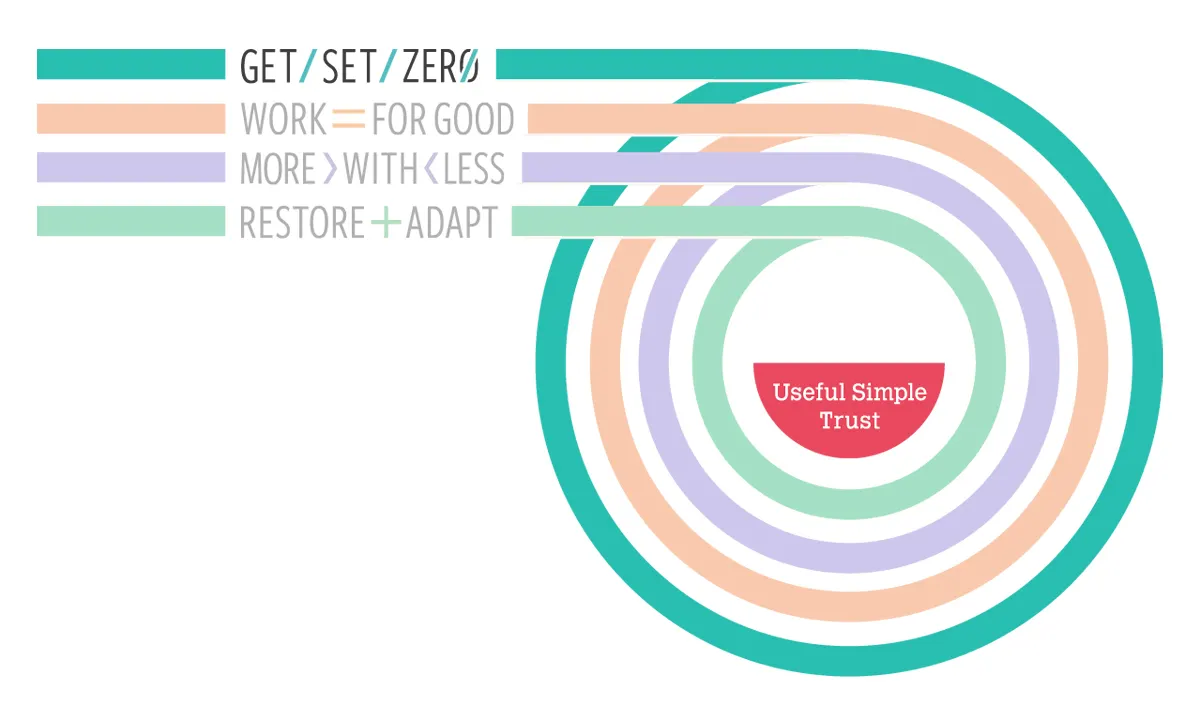
Climate Transition Action Plan Get Set Zero impact strand

Today marks a pivotal moment in the Useful Simple Trust’s sustainability journey. After years of dedicated work and commitment to our Science Based Targets, we are proud to publicly launch our Climate Transition Action Plan (CTAP).

This CTAP is a blueprint for transforming climate goals into measurable action – providing transparency on our carbon context, identifying our emission hotspots, and outlining our target pathway with specific actions for 2026.

Why This Matters

Whilst we recognise that our greatest impact is through our project work, we believe that every organisation has a responsibility to combat climate change. For us, reducing our impact aligns with who we are as a business; our Ethos and our status as B Corp, Social Enterprise, and Employee Benefit Trust.

The Trust’s four Impact Strands – Get Set Zero, Work for Good, Restore and Adapt, and More with Less – knit together the projects and services our brands provide to clients. Our CTAP focuses on accelerated action towards net zero carbon in line with Get Set Zero, and provides a near-term roadmap aligned with the critical 1.5°C pathway following guidance from the We Mean Business Coalition.

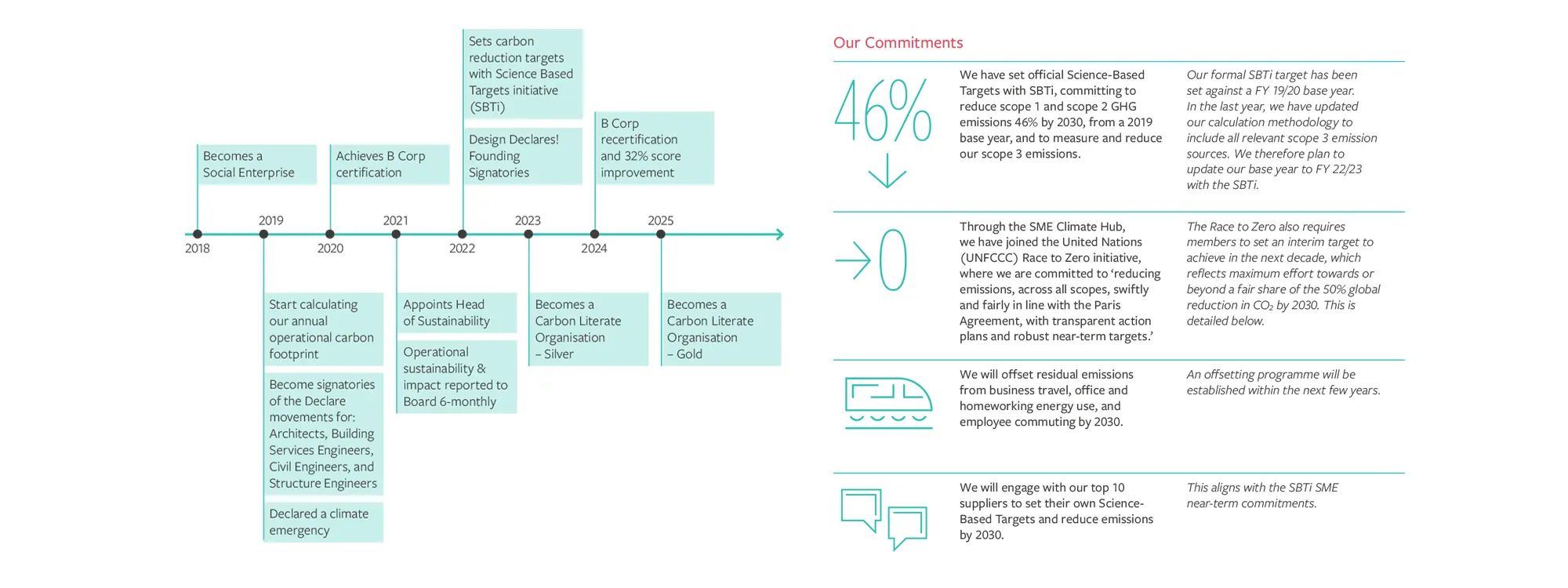
Climate Transition Action Plan timeline and commitments

Our Journey

2018: Became a Social Enterprise

2019: Started calculating our annual operational carbon footprint

2020: Achieved B Corp status

2021: Appointed our Head of Sustainability, Carrie Behar

2022: Set carbon reduction targets with the Science Based Targets initiative (SBTi)

2023: Became a Carbon Literate Organisation – Silver

2024: B Corp recertification and 32% score improvement

2025: Became a Carbon Literate Organisation – Gold

Our Commitments

1. We have set official Science-Based Targets with SBTi, committing to reduce Scope 1 and 2 GHG emissions 46% by 2030, from a 2019 base year, and to measure and reduce our Scope 3 emissions.

2. Through the SME Climate Hub, we have joined the United Nations (UNFCCC) Race to Zero initiative, where we are committed to ‘reducing emissions, across all scopes, swiftly and fairly in line with the Paris Agreement, with transparent action plans and robust near-term targets’.

3. We will offset residual emissions from business travel, office and homeworking energy use, and employee commuting by 2030.

4. We will engage with our top 10 suppliers to set their own Science Based Targets and reduce emissions by 2030.

Discover how we are turning climate commitments into measurable action.